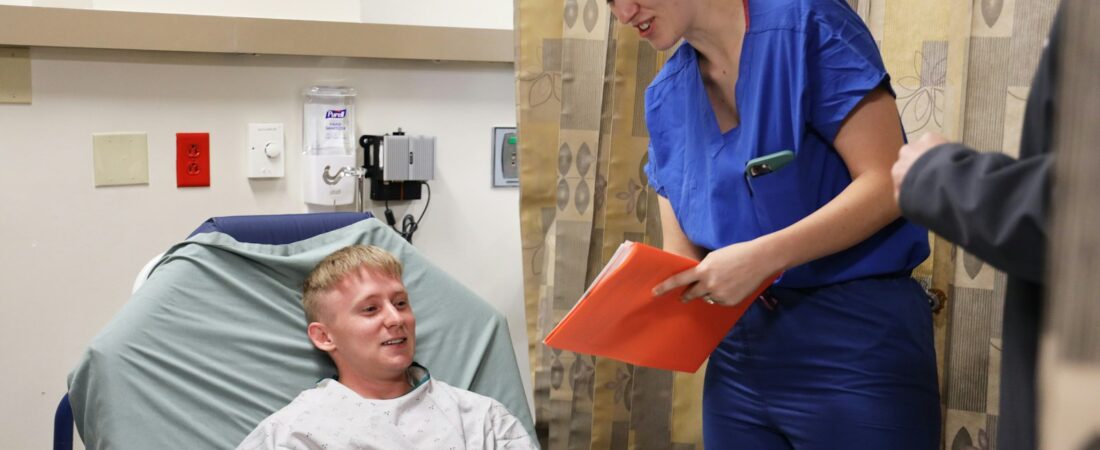
If you are a psychiatric nurse, you already know the paradox at the heart of the job: the most valuable thing you do is sit with a patient in crisis and truly listen, yet the system rewards you for how fast you close a note. Between mental status exams, safety assessments, medication reconciliation, and the endless behavioral-health documentation that follows every interaction, it is common to spend more of your shift charting than at the bedside. That is exactly where the best AI tools for psychiatric nurses in 2026 earn their place.
I have spent the last several months testing AI scribes and documentation assistants in real mental-health workflows, and the honest verdict is that the good ones genuinely give you time back. They listen to a session, draft a structured progress note, and let you review and sign in a fraction of the usual time. The weak ones add clicks and hallucinate details you then have to hunt down and delete. The difference matters more in psychiatry than almost anywhere else, because our notes carry legal weight and describe a person’s inner state.
This guide walks through six tools I would actually recommend to a working psych nurse, with what each one does, a concrete use case, honest pros and cons, and current pricing so there are no surprises. None of these replace your clinical judgment, and none should ever be handed a patient’s risk assessment to decide on its own. Used well, though, they hand you back the one resource you never have enough of: time and attention for the patient in front of you.

Quick Comparison Table
| Tool | Best For | Free Plan | Paid From | Rating |
|---|---|---|---|---|
| Freed AI | Fast ambient progress notes | Trial notes | ~$99/mo | 4.6/5 |
| Mentalyc | Behavioral-health note formats | Trial | ~$39/mo | 4.5/5 |
| Upheal | Session insights and notes | Yes (limited) | ~$59/mo | 4.4/5 |
| Heidi Health | Flexible clinical scribe | Yes | ~$99/mo | 4.5/5 |
| Suki AI | Voice-first enterprise EHR | No | Custom | 4.3/5 |
| ChatGPT | Patient education and psychoeducation | Yes | $20/mo | 4.4/5 |
1. Freed AI — The Fastest Route to a Finished Note
Freed AI is an ambient medical scribe that listens to your patient encounter through your phone or laptop and produces a structured clinical note within seconds of the visit ending. For psychiatric nurses running back-to-back assessments, its appeal is speed: you finish talking, glance at the draft, make a couple of edits, and move on.
Use case for psych nursing: During an intake or a medication-management follow-up, Freed captures the narrative, the mental status observations you speak aloud, and the plan, then formats them so you are editing rather than typing from a blank screen.
- Ambient capture with no dictation commands to memorize
- Customizable note templates you can bias toward behavioral health
- Learns your phrasing over time to reduce editing
- Works on mobile, which suits inpatient units and community visits
Pros: Extremely fast, low learning curve, strong at conversational encounters. Cons: Not a full EHR integration for every system, and you still must verify risk language yourself. Pricing: A free trial covers your first notes; individual plans run around $99/month, with group rates for teams.
Best for: Psych nurses who want the shortest possible path from conversation to signed note.
2. Mentalyc — Built for Behavioral-Health Documentation
Unlike general medical scribes, Mentalyc was designed specifically for mental-health clinicians, so it speaks the language of progress notes, treatment plans, and behavioral-health formats out of the box. It can generate SOAP, DAP, and other structured note types that psychiatric documentation actually calls for.
Use case for psych nursing: After a therapy-style or supportive session, Mentalyc drafts a note that already reflects behavioral-health conventions, so you spend less time reshaping a generic medical template into something a psych chart expects.
- Purpose-built note formats for mental health
- Progress-note and treatment-plan support
- De-identification options for privacy-conscious workflows
- Trend summaries across a client’s sessions
Pros: Format fit is excellent for psychiatry; less rewriting than general scribes. Cons: Geared toward outpatient and therapy settings, so inpatient acute workflows may need adjustment. Pricing: Free trial, then tiered plans starting around $39/month depending on note volume.
Best for: Outpatient and community psychiatric nurses who want notes that already sound like behavioral health.

3. Upheal — Notes Plus Session Insight
Upheal is another mental-health-first platform that produces progress notes automatically and layers in analytics about the session, such as talk-time balance and recurring themes. For psychiatric nurses who value pattern recognition across a treatment course, that extra context can be genuinely useful.
Use case for psych nursing: Across a series of visits with the same patient, Upheal’s session insights help you notice shifts you might otherwise only feel intuitively, and it keeps the paperwork moving in the background.
- Automated progress notes with editable structure
- Session analytics and theme detection
- Secure, privacy-focused design
- Client history kept in one place
Pros: The analytics are a differentiator; a usable free tier lets you test before paying. Cons: Insights are supportive, not diagnostic, and should be read that way. Pricing: Free plan with limited sessions; paid plans from about $59/month.
Best for: Psych nurses managing longitudinal caseloads who want light analytics alongside notes.
4. Heidi Health — A Flexible Scribe That Adapts
Heidi Health is a clinical AI scribe used across many specialties, and its strength is flexibility. You can shape templates to match your unit’s expectations, dictate or record, and generate not just notes but letters, summaries, and handover documents.
Use case for psych nursing: On a busy inpatient psychiatric unit, Heidi can turn a verbal handover or an assessment into a clean written record, and its template control lets you standardize how safety and risk sections appear.
- Highly customizable templates and outputs
- Generates notes, letters, and summaries
- Free plan available to start
- Works across desktop and mobile
Pros: Adaptable to many psychiatric settings; genuinely useful free tier. Cons: The flexibility means a bit more setup to get your templates right. Pricing: Free plan; Pro plans from roughly $99/month.
Best for: Teams that want one scribe to cover several document types on a psychiatric service.
5. Suki AI — Voice-First, Enterprise-Grade
Suki is a voice-driven clinical assistant that integrates deeply with major electronic health records. It is aimed at health systems rather than individual buyers, so it shines where your facility has already committed to an EHR-connected AI workflow.
Use case for psych nursing: In a hospital that has deployed Suki, a psychiatric nurse can dictate directly into the chart, pull information by voice, and keep hands free during documentation-heavy shifts.
- Deep EHR integration and voice commands
- Ambient note generation
- Enterprise security and support
- Hands-free chart navigation
Pros: Powerful when your organization backs it; strong EHR ties. Cons: No self-serve free plan, and adoption depends on your employer. Pricing: Custom enterprise pricing arranged through your facility.
Best for: Psychiatric nurses in larger systems that have already invested in an integrated AI scribe.

6. ChatGPT — The Flexible Sidekick for Everything Else
ChatGPT will not sit in on your session, but it is remarkably useful for the work that surrounds patient care: drafting psychoeducation handouts, translating a coping-skills explanation into plain language, or helping you word a difficult family update. Treat it as a writing and thinking aid, never as a source of clinical decisions.
Use case for psych nursing: After a shift, you can ask it to turn a dense discharge plan into a patient-friendly one-pager on managing anxiety at home, then you review every line for accuracy before it goes out.
- Drafts patient education and psychoeducation materials
- Simplifies complex instructions into plain language
- Helps structure difficult conversations and letters
- Free tier plus an affordable upgrade
Pros: Endlessly flexible and cheap. Cons: Not HIPAA-covered on the consumer plan, so never enter identifiable patient information. Pricing: Free plan; ChatGPT Plus is $20/month.
Best for: General writing, education, and brainstorming around care, kept strictly free of protected health information.
How to Get Started
You do not need to overhaul your workflow overnight. The nurses who succeed with these tools start small and let evidence build.
- Step 1 — Check what your facility allows. Confirm which tools are approved and HIPAA-compliant for your organization, and never route patient data through anything your employer has not cleared.
- Step 2 — Pick one tool and one workflow. Choose a single scribe, such as Freed or Mentalyc, and use it only for one note type at first, like medication follow-ups.
- Step 3 — Review every draft closely. For the first two weeks, read each AI note line by line, correcting risk and safety language so the tool learns your standards and you learn its blind spots.
- Step 4 — Measure and expand. Track minutes saved per shift; if the tool is clearly helping, extend it to more encounters and consider a paid plan.
Common Mistakes to Avoid
Even good tools go wrong in the wrong hands. Watch for these traps as you adopt AI into psychiatric documentation.
- Trusting the risk language. Never let an AI phrase a suicide or safety assessment for you unchecked. Read and rewrite every risk statement so it reflects exactly what you observed and decided.
- Feeding identifiable data into consumer tools. A free chatbot is not the place for names, dates of birth, or clinical identifiers. Keep protected health information inside approved, compliant platforms only.
- Signing without reading. Speed is the point, but a note you did not actually review is a liability. Skim-signing defeats the safety of the whole workflow.
- Letting the template flatten nuance. Psychiatric presentations are subtle. If a generic format is erasing the specifics of a patient’s mental status, adjust the template rather than accepting a note that reads like everyone else’s.
- Skipping facility approval. Adopting a tool your organization has not cleared can create compliance problems no time savings will justify.
Frequently Asked Questions
Are AI documentation tools HIPAA-compliant for psychiatric nurses? Some are, and some are not. Purpose-built clinical scribes typically offer HIPAA-compliant plans and business associate agreements, while consumer chatbots usually do not. Always verify compliance and get your facility’s approval before using any tool with patient information.
Will an AI tool replace my clinical judgment? No. These tools draft and organize documentation; they do not assess risk, diagnose, or decide care. Every note, especially any safety or risk assessment, must be reviewed and owned by you.
How much time can a psychiatric nurse realistically save? Nurses who adopt an ambient scribe commonly report saving anywhere from several minutes per encounter to more than an hour across a full shift, though results depend on your note types and how much editing you still do.
Do these tools work for inpatient and outpatient psychiatry? Yes, but fit varies. Mentalyc and Upheal lean toward outpatient and therapy-style documentation, while Heidi and Suki adapt well to inpatient and acute settings.
Is it safe to use free AI tools for psychiatric documentation? Free tiers are fine for learning and for non-identifiable tasks, but for anything containing protected health information you should use a compliant, approved plan rather than a consumer free product.
Conclusion
If I had to name one starting point for a working psychiatric nurse, it would be Freed AI for its sheer speed and gentle learning curve, with Mentalyc a close second when your documentation is behavioral-health specific. The best AI tools for psychiatric nurses in 2026 will not replace the human core of the work, but they will hand you back time that belongs at the bedside. Start with one tool, protect your patients’ privacy, and keep your clinical judgment firmly in charge.
For more on trimming charting time, see our guide to AI tools for nurse documentation, and when you are ready to compare options across specialties, explore more AI tools for professionals.