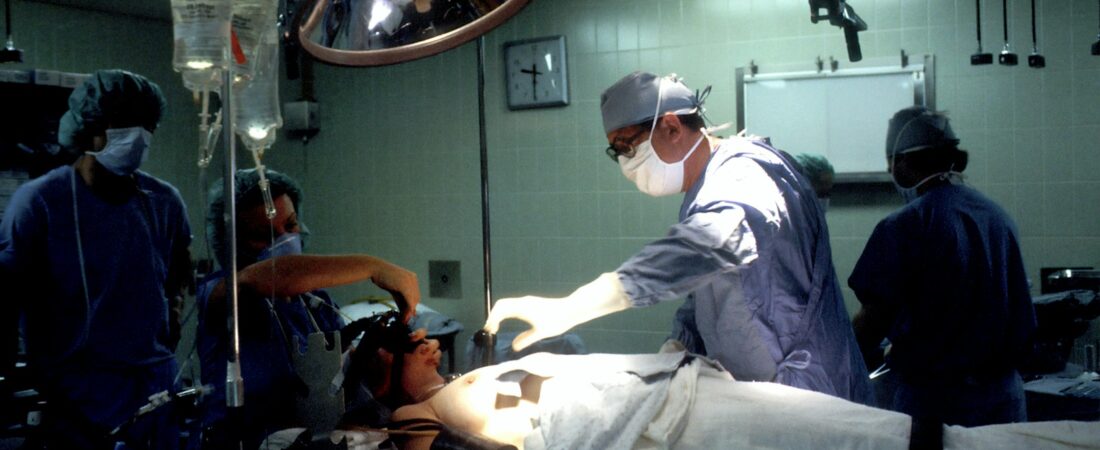
If you scrub in for six cases and then spend the last forty minutes of your shift catching up on perioperative documentation, you already know where the time goes. The best AI tools for operating room nurses in 2026 are not about replacing clinical judgment in the room. They are about clawing back the charting, the handoff notes, and the endless double-checking that pile up between cases and follow you home in your head.
Operating room nurses live in a strange documentation gap. You cannot type while you are circulating, counting, or managing the sterile field, so notes get batched, rushed, or reconstructed from memory at the end of the day. That is exactly where errors and missed charges creep in, and it is exactly where a well-chosen AI assistant earns its keep.
I have pulled together the tools that actually fit the perioperative workflow, not generic “AI for healthcare” hype. For each one you will get an honest look at what it does, where it fits an OR nurse’s day, real pricing where it is public, and who should skip it. Let’s get into it.

Quick Comparison Table
| Tool | Best For | Free Plan | Paid From | Rating |
|---|---|---|---|---|
| Abridge | Ambient perioperative notes | No | Enterprise quote | 4.7/5 |
| DAX Copilot | Epic-integrated charting | No | Enterprise quote | 4.6/5 |
| Suki AI | Voice-first note capture | No | ~$199/mo | 4.5/5 |
| Nabla | Solo clinicians on a budget | Yes | ~$119/mo | 4.5/5 |
| OpenEvidence | Evidence at the point of care | Yes | Free (verified) | 4.6/5 |
| ChatGPT | Education and draft writing | Yes | $20/mo | 4.5/5 |
Abridge
Abridge is an ambient AI documentation platform that listens to a clinical conversation and drafts a structured note in real time. In a perioperative setting it shines during pre-op interviews and post-op handoffs, turning a spoken exchange into a clean summary you can review and drop into the record.
For OR nurses, the value is not in the room during the sterile portion of a case. It is in the bookends: the pre-op assessment, the family update, and the recovery handoff, where you would otherwise be reconstructing a conversation from memory.
- Real-time ambient capture with speaker separation
- Deep Epic and other EHR integrations
- Traceable notes that link back to what was actually said
- Enterprise-grade HIPAA compliance and audit trails
Pros: Excellent accuracy, strong EHR integration, and notes you can defend because they cite the source audio. Cons: No individual or free plan, so you are dependent on your facility adopting it. Pricing is enterprise-only and negotiated per health system.
Pricing: Enterprise licensing through your hospital; no public per-nurse rate as of early 2026.
Best for: OR nurses at larger hospitals whose systems have already rolled Abridge out for pre-op and PACU documentation.
Microsoft Nuance DAX Copilot
DAX Copilot is Microsoft and Nuance’s ambient clinical documentation tool, and it is one of the most widely deployed options inside big EHR systems. It converts a natural conversation into a draft note that lands directly in the chart, which removes the copy-paste step that eats time.
In perioperative units, DAX is most useful for the assessment and education portions of your workflow rather than intraoperative charting. If your facility runs Epic, the tight integration means fewer clicks between the conversation and the finished note.
- Ambient documentation embedded in Epic and other EHRs
- Specialty-aware note formatting
- Automated draft summaries for review before signing
- Backed by Microsoft’s enterprise security stack
Pros: Mature product, broad hospital adoption, and reliable EHR handoff. Cons: Enterprise-only, and the experience is tuned more for providers than for circulating nurses, so your admin has to configure it for your role.
Pricing: Enterprise, per-provider licensing negotiated through Microsoft or your EHR vendor; no public flat rate.
Best for: Perioperative teams already standardized on Epic who want documentation that never leaves the system.

Suki AI
Suki is a voice-first AI assistant built for clinicians who would rather talk than type. You dictate, and Suki structures the note, handles commands, and syncs to the EHR. For a nurse moving between cases with no free hands for a keyboard, the voice-first design is the whole point.
Suki works well for the narrative parts of perioperative documentation, such as a description of positioning, skin integrity checks, or a recovery note dictated on the walk from the OR to PACU.
- Hands-free voice dictation and voice commands
- EHR sync with major systems
- Ambient mode that summarizes a conversation
- Learns your phrasing and shortcuts over time
Pros: Genuinely fast once it learns your voice, and the command structure suits a mobile role. Cons: Real cost per user, and it needs a quiet enough moment to dictate accurately, which the OR does not always offer.
Pricing: Subscription, historically around $199 per user per month, with enterprise pricing for facility rollouts.
Best for: OR nurses who think out loud and want a dictation-driven note instead of a keyboard.
Nabla
Nabla is an ambient AI assistant that has leaned into accessibility for individual clinicians, with a usable free tier and a lower paid price than most enterprise tools. It listens, drafts a structured note, and lets you edit before anything is finalized.
For an OR nurse who wants to test ambient documentation without waiting for a hospital-wide contract, Nabla is one of the few options you can actually try yourself.
- Free core tier for individual use
- Ambient note generation with editable output
- Specialty templates you can adapt
- Straightforward setup without an enterprise sales cycle
Pros: Low barrier to entry, a real free plan, and honest editing controls. Cons: Lighter EHR integration than the enterprise players, so you may be copying the final note into the chart yourself.
Pricing: Free core tier; paid Copilot plans from roughly $119 per month, plus enterprise options.
Best for: Solo-minded nurses and small surgery centers that want ambient AI without a corporate contract.
OpenEvidence
OpenEvidence is an AI answer engine built specifically on peer-reviewed medical literature. Instead of drafting notes, it answers clinical questions with citations, which makes it a fast sanity check when a case throws you something unfamiliar.
In the OR, that might mean confirming a positioning precaution, a medication interaction, or the latest guidance on a surgical site infection bundle without digging through a binder or a slow database.
- Answers grounded in current peer-reviewed sources
- Citations you can click and verify
- Free for verified clinicians
- Fast enough for point-of-care questions
Pros: Free for verified US clinicians, genuinely evidence-based, and quick. Cons: It informs your judgment, it does not document for you, and you still have to verify against your facility’s protocols.
Pricing: Free for verified clinicians.
Best for: OR nurses who want a trustworthy, citable answer during a case instead of a guess.
ChatGPT
ChatGPT is the general-purpose assistant most nurses already have on their phone, and for non-PHI tasks it is surprisingly useful. Think drafting patient education handouts, rewriting an in-service outline, or turning messy notes into a clean SBAR template you reuse every shift.
The hard rule: never paste protected health information into a consumer AI tool. Used for education, study, and administrative drafting, though, it saves real time.
- Drafts education materials and templates
- Explains unfamiliar procedures in plain language
- Reformats and summarizes non-PHI text
- Free tier plus an affordable upgrade
Pros: Free to start, flexible, and always available. Cons: Not HIPAA-covered on consumer plans, so it can never touch patient data.
Pricing: Free tier; ChatGPT Plus is $20 per month; Team plans run about $25 to $30 per user per month.
Best for: Education, template-building, and any administrative writing that contains no patient identifiers.

How to Get Started
Rolling AI into a perioperative workflow works best when you start small and prove the time savings before you scale.
- Pick one painful task. Usually it is the end-of-shift charting backlog or the PACU handoff. Choose the single documentation moment that consistently runs over.
- Match the tool to the task. Use an ambient tool like Nabla or Suki for spoken notes, and OpenEvidence for quick clinical questions. Do not try to adopt everything at once.
- Check compliance first. Confirm with your nurse manager and IT which tools are HIPAA-covered and approved for PHI. Keep consumer tools like ChatGPT strictly for non-identifying work.
- Measure before and after. Time yourself on that one task for a week without the tool, then a week with it. If it is not saving you real minutes, drop it and try the next option.
Common Mistakes to Avoid
Even the best AI tools for operating room nurses backfire when they are used carelessly. Watch for these traps before they cost you time or a compliance headache.
- Pasting patient data into consumer tools. ChatGPT and similar consumer plans are not HIPAA-covered. Keep every identifier inside approved, covered systems, no exceptions.
- Trusting output without verifying. An AI summary or answer is a starting point. Always check it against your facility’s protocols and your own clinical judgment before acting on it.
- Adopting five tools at once. Piling on tools creates confusion and abandoned subscriptions. Prove one saves time before adding another.
- Skipping the compliance conversation. Rolling out a documentation tool without your manager and IT signing off can violate policy. Confirm approval before anything touches the chart.
- Expecting intraoperative charting. These tools are for the bookends of a case, not the sterile field. Set that expectation up front so the workflow actually fits.
Frequently Asked Questions
Can AI tools be used during surgery in the operating room?
Not for hands-on charting during the sterile portion of a case. AI documentation tools are most useful in the pre-op assessment, family updates, and post-op handoff, where you can speak naturally and review the draft afterward.
Are these AI tools HIPAA compliant?
The enterprise clinical tools like Abridge, DAX Copilot, Suki, and Nabla offer HIPAA-covered arrangements through your facility. Consumer tools like ChatGPT are not covered on standard plans, so they must never receive patient information.
Do I need my hospital’s approval to use them?
For anything touching patient data, yes. Ambient documentation tools are typically adopted at the facility or department level. You can explore non-PHI tools like OpenEvidence and ChatGPT on your own, but always confirm your organization’s policy first.
Will AI documentation replace operating room nurses?
No. These tools handle the typing and summarizing, not the clinical judgment, the counts, or the patient safety work that defines the role. They give you back time, they do not replace the nurse.
What is the cheapest way to try AI as an OR nurse?
Start with the free tools. OpenEvidence is free for verified clinicians, Nabla has a free core tier, and ChatGPT has a free plan for non-PHI drafting. That combination costs nothing and covers most day-to-day needs.
Conclusion
If I had to name one starting point, it would be pairing OpenEvidence for point-of-care answers with an ambient tool your facility already supports for the pre-op and handoff notes. That combination attacks the two biggest time sinks in a perioperative shift without asking you to change how you work in the room. For teams that want a single vendor with deep EHR integration, Abridge is the strongest all-around pick in 2026.
Whatever you choose, treat these tools as an assistant, not an authority, and keep patient data only inside HIPAA-covered systems. If you want to compare documentation options in more depth, our guide to the best AI tools for nurse documentation in 2026 goes deeper on charting workflows, and you can explore more AI tools for professionals across every specialty.